The 5 Biggest Roadblocks Beginner Surfers Face—And How to Finally Overcome Them
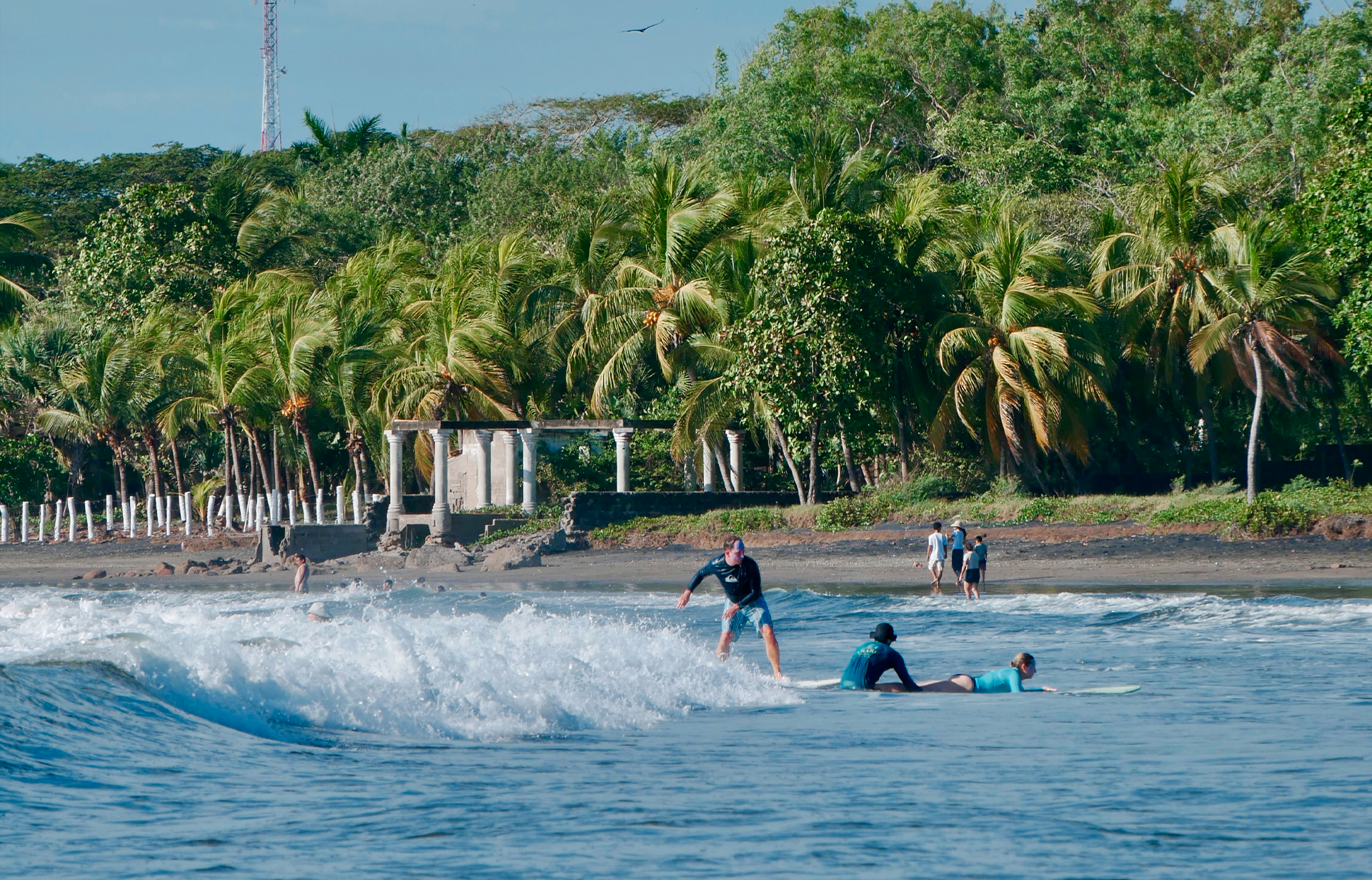
Students surfing our beginner Break in Northern Nicaragua
Learning to surf is one of the most rewarding things you can do… but it also comes with a unique set of challenges that don’t always get covered on TikTok. While many beginner surfers may get discouraged and begin to think they’re not “athletic enough” or “cut out for surfing”, but the truth is that they’re probably running into the same five roadblocks almost every new surfer faces—and can 100% overcome with the proper help.
Every single one of the beginner surf mistakes outlined below has a clear solution; especially if you’re learning with a surf school or experienced guide who can help you identify and troubleshoot as you go.
Let’s get into it…

One-on-One coaching between our instructor Ross and a student
Roadblock 1: Using the Wrong Board (AKA the #1 Progress Killer for Beginner Surfers)
If surfing had a cheat code, it would be this: pick the right surfboard and everything else will start falling into place. Most beginner surfers start out on boards that are way too small, and although it may feel more “cool” to carry a shortboard around, it’s a actually huge hindrance to progressing in surfing. The truth is that bigger boards lead to more waves caught, more waves caught leads to more practice, and more practice leads to faster surf progression.
The best surfboards for beginners are almost always high-volume soft tops, funboards, or longboards. This is because at the beginning of your surf journey, the end goal isn’t to “earn” a shortboard—it’s to catch waves, stay stable, and build the muscle memory that makes everything else click.
How we help:
Our surf school starts every new surfer with a proper board fitting. We match you with the exact volume, length, and shape that helps you catch more waves in your very first surf lesson—and we adjust your board as you progress so your equipment never holds you back.
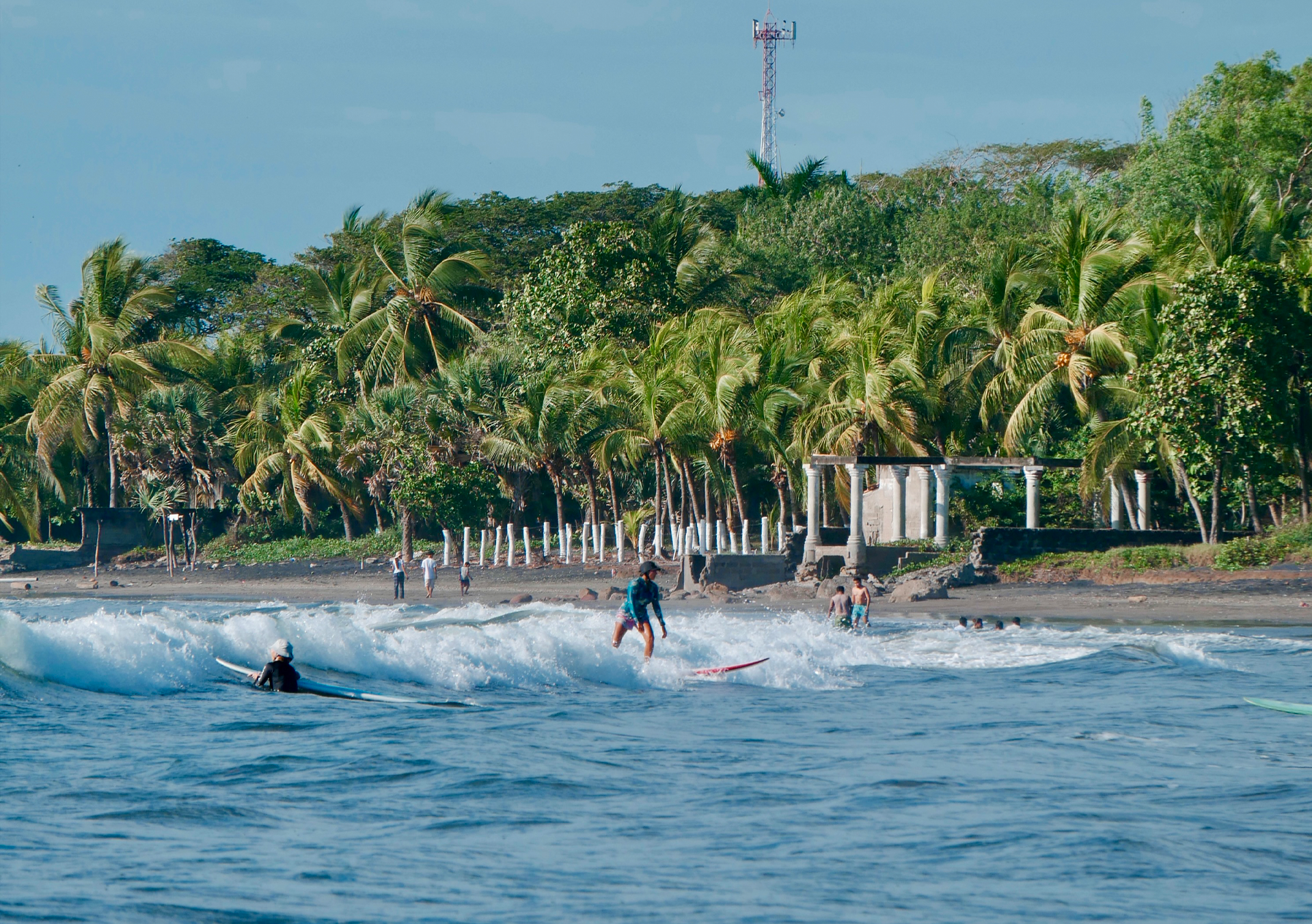
An Amaru student catching one in at the nearby beginner break!
Roadblock 2: Surfing the Wrong Waves for Your Skill Level
You can have the perfect board and a solid pop-up… and still struggle if the waves are fighting you. Many beginner surfers unknowingly paddle out in conditions that are too steep, too fast, too heavy, too crowded—or simply breaking in a way that makes learning harder than it needs to be. Beginner-friendly waves are usually slow, crumbly, predictable, uncrowded, and forgiving when you fall. This is where a surf school or knowledgeable surf guide changes everything.
At Amaru, we take the guesswork out of picking the right waves for your experience level. We know how each regional break works and have specific spots that lend themselves to every level surfer. Each evening when we plan the next day’s sessions, we read the forecast and choose the correct tide and surfbreak for your skill level. All you have to do is show up and finally start catching real waves and making true progress instead of battling the ocean.
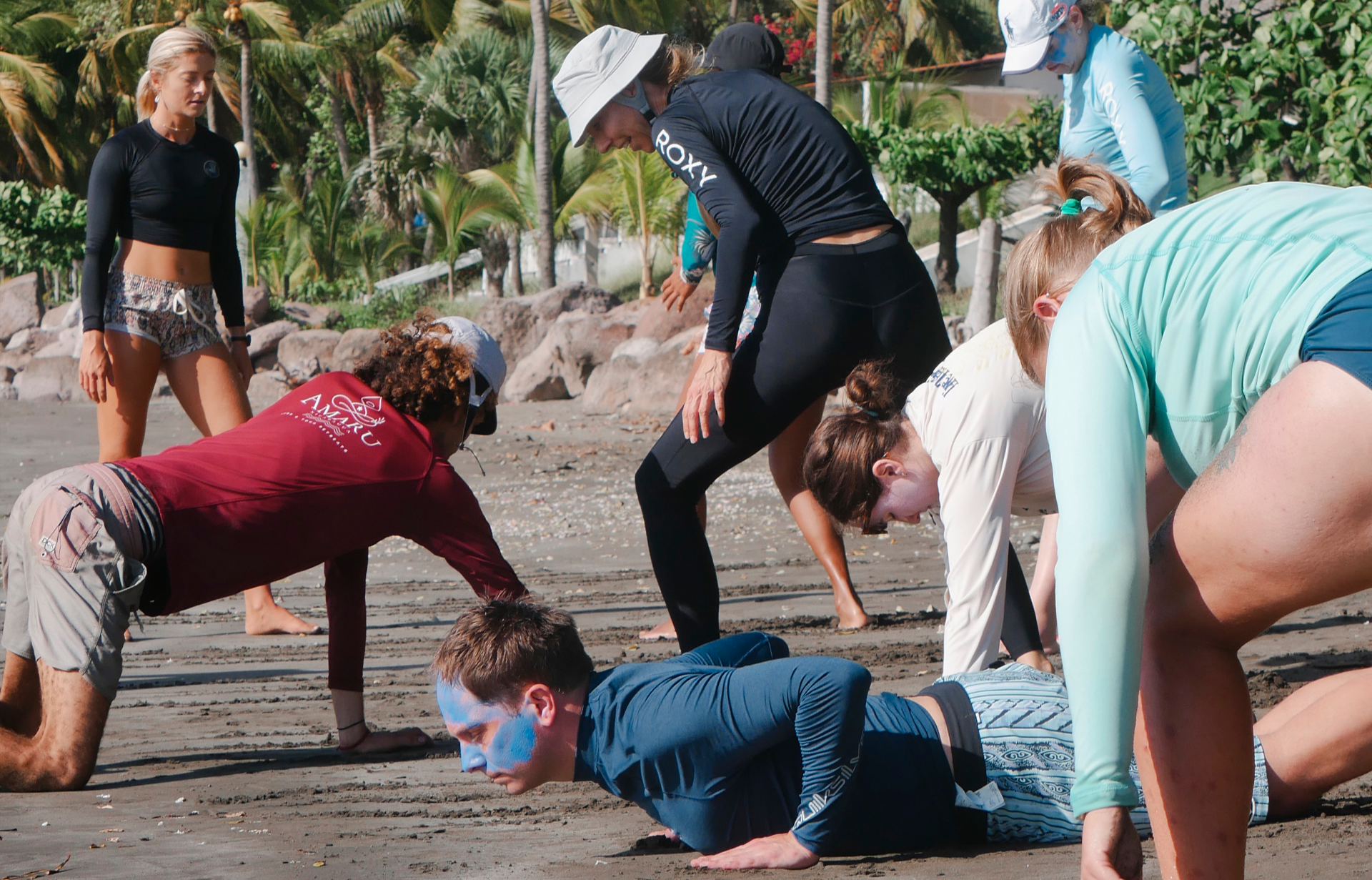
Students practicing their paddling and pop-up technique on the beach with coach Cristhiam
Roadblock 3: Mental Blocks & Fear (The Silent Surf Progress Thief)
Fear in surfing is totally normal—and wildly underestimated as a progress killer. Beginner surfers often struggle with fear of wiping out, being held under, navigating crowds, or even accidentally dropping in on someone. What many beginner surfers aren’t told is that overcoming fear in the water is a coachable skill—just like paddling or popping up.
At Amaru, we believe that being informed on surf & ocean dynamics is one of the keys to overcoming fear in the water. When you understand the dynamics of a particular wave and the rules of a lineup, you can predict how situations will unfold. This makes it easier to commit to waves, and commitment is the difference between missing a ride and taking it all the way to the beach.
Our surf instructors were all once beginners. They know what it’s like to feel overwhelmed in the water, and beyond that, they know what it takes to overcome that mental block. They are there as a resource to offer encouragement, mental tricks, and helpful insight into each break that will ultimately allow you to send it with confidence.
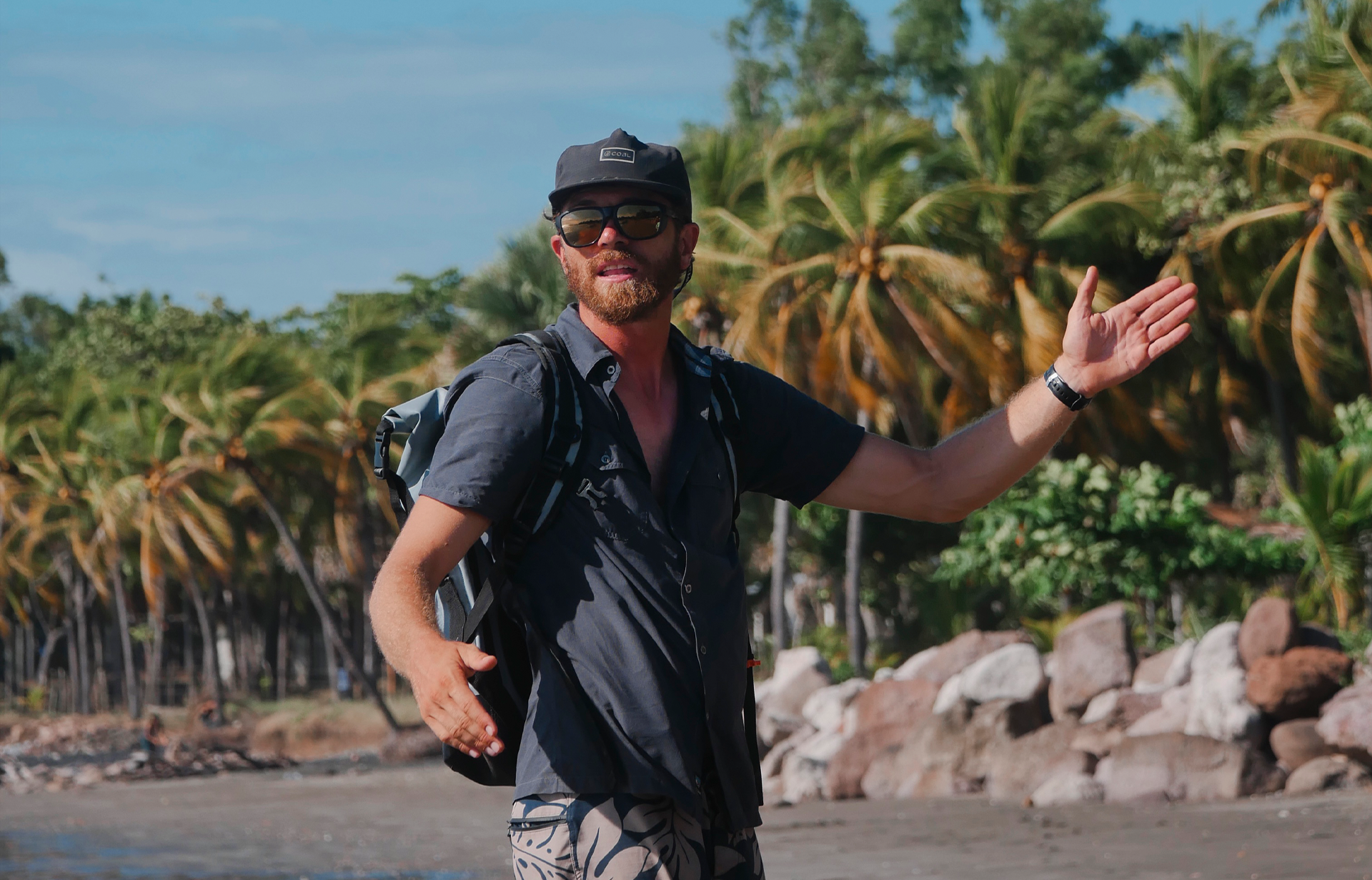
Coach Ross giving a lesson on the beach about triangulation before paddling out
Roadblock 4: Not Knowing How to Read the Ocean (Timing, Positioning & Wave Selection)
Most beginner surfers think that surfing is all about standing up, but the truth is that surfing is actually more of an ocean-reading practice. If you don’t know where the peak is, where to sit, how far out to paddle, how to spot a set wave early, which waves are “yours,” or when to turn and go—then catching waves feels like winning a raffle instead of building a repeatable skill. And while you can learn these skills on your own, it’s exponentially easier if you work with an expert who can clue you in to what is going on out in the lineup.
With a surf school or surf guide, you shortcut the entire process. We literally point to the exact spot you should sit, the exact wave you should paddle for, and coach you through the timing until it becomes second nature. Think of it as skipping months (or even years) of trial and error.
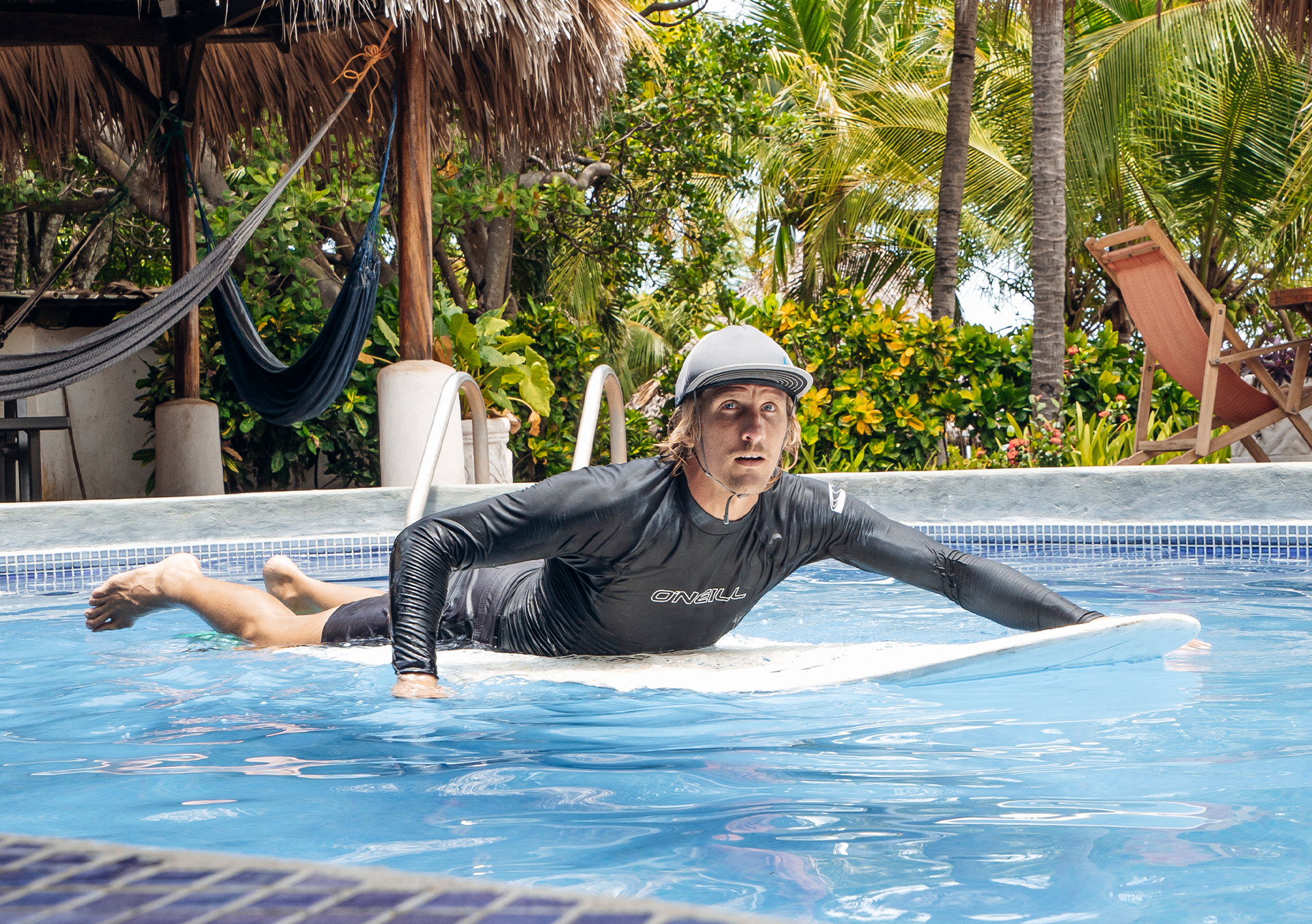
Our Co-founder Gerritt teaching a paddle technique class in our clifftop pool
Roadblock 5: Weak Paddling Technique & Low Endurance
About 70% of surfing is paddling, and this is where most beginner surfers struggle. Common beginner surf mistakes include poor paddling mechanics, arching too much or too little, tiring out quickly, panic paddling when a wave approaches, or even holding their breath instead of relaxing. The result? Missed waves, wasted energy, getting stuck on the inside, and often a hit to confidence. Improving your paddling technique and positioning will do more for your surfing than any board upgrade ever will.
Our surf lessons and guided sessions place a strong focus on efficient paddling — shoulder-friendly mechanics, proper body position, when to rest, and how to pace yourself so you have power when it matters most. Even a single paddling session in our pool can completely change how surfing feels by teaching you how to paddle smarter, not harder.
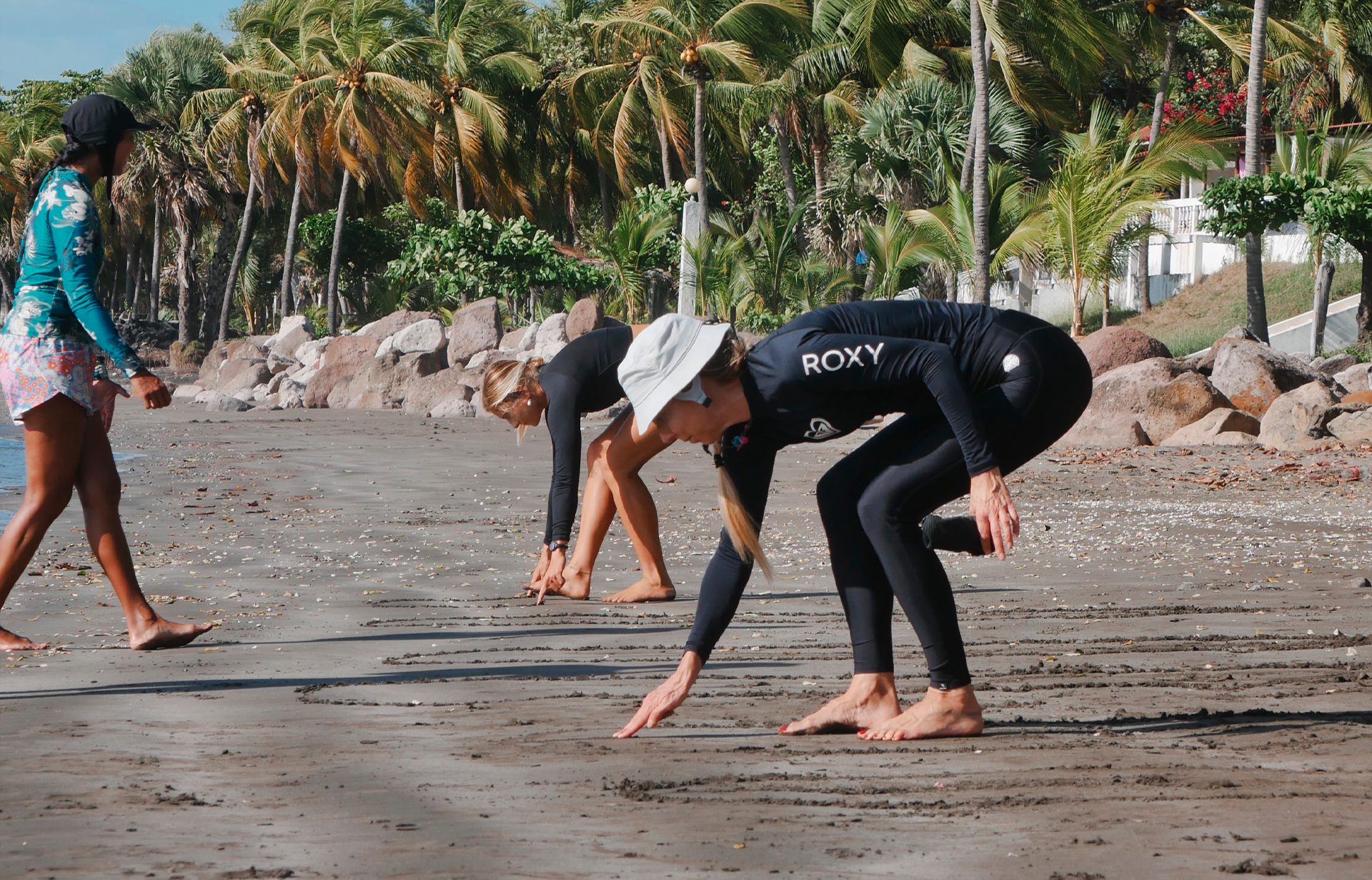
Creating “Surfboards” in the sand to work on board positioning
Surfing Doesn’t Have to Be Hard—Let Us Help You Fast-Track Your Learning
Most beginner surfers struggle because they’re trying to figure out everything alone: the waves, the boards, the timing, the fear, and the progression path.
With structured surf lessons or guided surf sessions, you get the right surfboard, the right waves for your level, clear guidance and support, proper technique from day one, and faster, more consistent progress. Whether you’re catching your first green wave or refining the fundamentals, our surf school and surf guide packages are designed to remove the guesswork from learning to surf and help you move past the beginner phase with more confidence.